 Phase-III, Dared, Jamnagar - 361 004.

 Hotline Number :

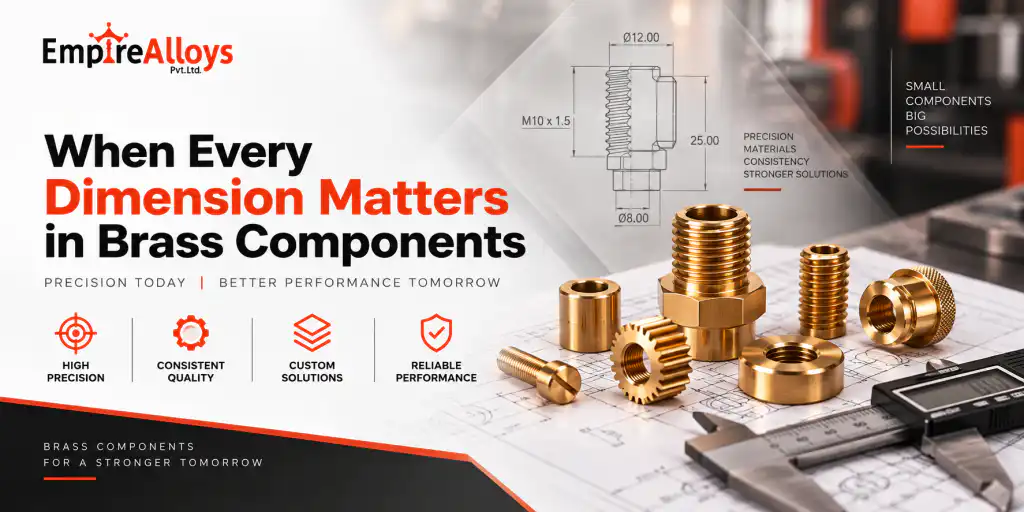
A brass component may look like a small part of a larger assembly, but its dimensions can have a direct effect on how the final product fits and functions. A slight variation in size, thread, shape, or hole position can create problems during installation or assembly. This is why precision becomes important when brass components are used for applications where proper fitting and consistent performance are expected.
From electrical and plumbing parts to automotive and machinery applications, precision-made components help maintain the required fit between different parts. Selecting the right material and machining process also plays an important role in achieving the required dimensions.
Why Does Precision Matter in Brass Components?
Precision is not only about making a component look accurate. It is about producing parts that match the required drawing, dimensions and tolerances.
For example, a threaded brass component needs to fit correctly with its corresponding part. If the thread dimensions are slightly different, installation can become difficult. Similarly, components used in an assembly need consistent dimensions so that repeated production and fitting can be carried out without unnecessary adjustments.
A reliable Precision Brass Components Manufacturer can produce components according to specified drawings and dimensions using suitable machining equipment and inspection methods. CNC and VMC machining can help achieve consistent results for components where dimensional accuracy is important.
What Types of Brass Components Can Be Made?
Precision brass components can take many forms depending on the application and design requirements. Common examples include:
Brass Screws & Nuts
Engineered with precise thread pitches for secure fastening.
Gears & Cogs
Machined with accurate tooth geometry for uniform transmission.
Brass Pipe Fittings
Leak-proof threads for reliable fluid control.
Electrical Appliance Parts
High-conductive turned parts for stable electrical connections.
Custom-Machined Parts
Tailored dimensions produced strictly per technical drawings.
Special-Purpose Parts
Custom configurations built to fit specific assembly needs.
The size, shape, thread, hole pattern, and overall configuration can vary from one requirement to another. This makes it important to discuss the component specification before production rather than selecting a part only by its appearance.
Material Selection Also Affects the Final Component
Brass is often chosen for parts because of its useful machining characteristics and can be suitable for applications that require good conductivity and durability. But, brass is not the only material for precision components.
Depending on the use, manufacturers may also work with copper, aluminium and stainless steel. That depends on factors like strength, conductivity, corrosion resistance, weight and machining requirements.
When comparing a Precision Brass Components Supplier, buyers should therefore check whether the required material and grade are available for the intended application.
Where Are Precision Brass Components Used?
The need for accurate components can be found across several applications. Precision brass parts are used in:
- Electrical and electronic equipment
- Plumbing systems
- Automotive components
- Machinery and equipment
- Hardware products
- Decorative applications
- Jewellery-related components
Each application can have different dimensional and functional requirements. A component designed for a plumbing fitting, for instance, may have different thread and dimensional requirements from a part used in an electrical assembly.
Customisation Makes a Difference
Standard components may work for common applications, but some assemblies require a specific size or design. Custom manufacturing allows components to be produced according to drawings, dimensions, and application requirements.
Before placing an order, it is useful to provide accurate drawings or specifications covering dimensions, threads, material, tolerances and finishing requirements. Clear technical information helps to reduce confusion and gives the manufacturer a better understanding of the finished part required.
What Should Buyers Check Before Ordering?
A few practical points can make the selection process easier:
- Dimensional accuracy: Check whether the required tolerances can be achieved.
- Material options: Confirm that a suitable material is available.
- Machining capability: Look for CNC, VMC, or other suitable machining facilities.
- Customisation: Check whether components can be produced according to drawings.
- Quality inspection: Ensure appropriate measuring and testing methods are followed.
FAQs
They are brass parts manufactured to specific dimensions and tolerances for accurate fitting and performance.
They are used in electrical, electronics, plumbing, automotive, machinery, hardware, and other applications.
Yes, custom components can be produced according to drawings, dimensions, and application requirements.
Depending on the requirement, materials can include brass, copper, aluminium and stainless steel.
CNC machining helps produce components with consistent dimensions and repeatable accuracy according to specified requirements.
Conclusion
When components are small, even a minor dimensional difference can affect the overall assembly. Choosing suitable materials, machining methods and quality checks helps achieve the consistency required for precision applications. With CNC and VMC machining capabilities, multiple material options and custom component production, Empire Alloys provides solutions for different precision component requirements.
Looking for precision-made brass components based on your drawings or application requirements? Contact us to discuss your component specifications and manufacturing needs.